Immigration cases are stressful even under the best circumstances. Paperwork deadlines, shifting policies, and long waiting periods can make the process feel overwhelming, especially if English is not your first language. In Farsi, we call this process “مهاجرت” (mohâjerat), and for many Iranian families in the US and Canada, finding a lawyer who speaks Farsi is not just about comfort. It is about making sure nothing gets lost in translation when your future is on the line.
This guide walks through what to look for, what questions to ask, how much you should expect to pay, and how to avoid common mistakes when hiring an immigration lawyer for your case.
Why Language Matters in Immigration Cases — چرا زبان اهمیت دارد
Immigration law is full of technical terms that are hard enough to understand in your native language, let alone a second one. A single misunderstood question during a consultation or a poorly translated document can affect the outcome of a case. Working with a Persian immigration attorney who understands both English and Farsi reduces that risk significantly.
Beyond translation, a lawyer who understands Persian culture also understands the context behind your situation. Family sponsorship cases, for example, often involve extended family structures, or “خانواده” (khânevâde), that a lawyer unfamiliar with Iranian culture might not fully grasp. Iranian families sometimes support aging parents, unmarried siblings, or extended relatives in ways that do not always map neatly onto standard immigration categories, and an attorney who understands this can advise you more accurately on your real options.
Common Types of Immigration Cases in the Iranian Community
Iranian families in North America typically need legal help with a handful of recurring situations, each with its own process and considerations.
Family sponsorship:
Bringing parents, spouses, or children to join family already living in the US or Canada. This is one of the most common case types, and processing times vary significantly depending on the relationship and current visa category backlogs.
Green card and permanent residency applications:
Moving from a temporary visa status to permanent residency, often the longest and most document-intensive process.
Citizenship applications:
Completing the naturalization process after meeting residency requirements, including preparing for the civics test and interview.
Student and work visas:
Helping students transition from an academic visa to long-term status, or assisting skilled workers with employment-based visas, a path many Iranian professionals in tech, medicine, and engineering rely on.
Asylum and humanitarian cases:
Supporting individuals seeking protection based on specific circumstances in their home country, often the most time-sensitive and legally complex category.
Each of these case types has its own timeline, documentation requirements, and potential complications, which is exactly why working with an experienced attorney matters.
What to Look for in an Immigration Lawyer — چه چیزی را باید بررسی کنید
Relevant Experience
Not every immigration lawyer has experience with the type of case you are dealing with. A lawyer who focuses on employment visas may not be the right fit for a family sponsorship case, and vice versa. Ask directly about their experience with cases similar to yours, and ask how many they have handled in the past year specifically, not just over their entire career.
Clear Communication
During your first conversation, pay attention to how clearly the lawyer explains your situation. A good attorney should be able to walk you through your options in plain language, whether that conversation happens in English or Farsi.
Transparent Fees
Immigration cases can take months or years, and legal fees add up. Ask for a clear breakdown of costs upfront, including whether the lawyer charges a flat fee or an hourly rate.
Realistic Expectations
Be cautious of any attorney who guarantees a specific outcome. A trustworthy attorney will explain the realistic range of outcomes and the risks involved. This comes back to “اعتماد” (e’temâd), trust, the same foundation that guides most decisions within the Iranian community.
How Much Does an Immigration Lawyer Cost?
Costs vary widely depending on case complexity. A straightforward family petition might run a flat fee of $1,500 to $3,500. More complex cases involving interviews, appeals, or court appearances can range from $5,000 to $15,000 or more. Asylum cases, which often require extensive documentation and testimony preparation, tend to sit at the higher end of that range.
Always ask whether the quoted fee covers the full case or only a specific stage, since some attorneys charge separately for filing, interview preparation, and any appeals that follow. Government filing fees are separate from attorney fees and should be budgeted for independently.
Documents You Should Prepare Before Your Consultation
Coming to your first meeting organized saves time and often reduces costs, since less of the lawyer’s billable time goes toward gathering basic information. Useful documents to bring include your passport and any prior visa records, any previous immigration filings or denials, marriage or birth certificates relevant to your case, proof of relationship for family sponsorship cases, and any correspondence you have already received from immigration authorities.
Questions to Ask During Your First Consultation
Coming prepared to your first meeting makes a real difference. Consider asking:
- How many cases like mine have you handled, and what were the outcomes?
- What is the realistic timeline for a case like mine?
- What documents will you need from me, and by when?
- How will we communicate throughout the process?
- What happens if my case is delayed or denied?
- Do you or your staff speak Farsi fluently, or will I need a translator?
- What is included in your fee, and what would cost extra?
Where to Find a Farsi-Speaking Immigration Lawyer
There are a few reliable ways to find the right attorney for your case:
Community referrals:
Ask friends, family, or other Iranian business owners in your city who they have worked with. Word of mouth remains one of the most trusted sources within the Iranian community.
Local bar associations:
Most state and provincial bar associations maintain directories that let you filter by practice area and sometimes by language.
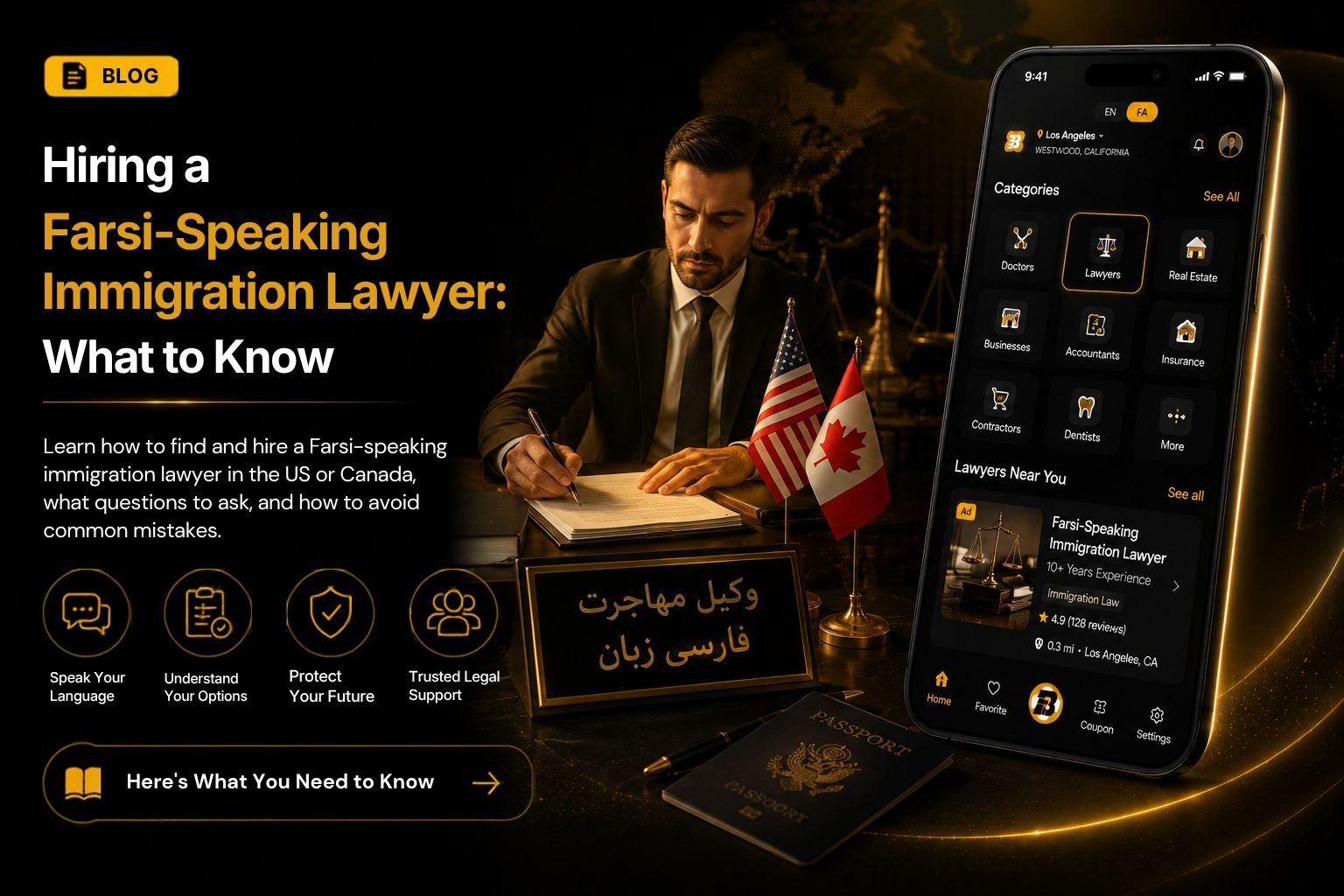
The Bato app:
Bato is the Iranian community’s own dedicated platform, listing Farsi speaking lawyers by city, making it easier to compare options without starting from scratch.
Red Flags to Watch For
A few warning signs suggest you should keep looking: pressure to sign immediately without time to review documents, vague answers about fees or timelines, no clear way to verify their license or standing with the bar, promises of guaranteed approval, and poor communication or long delays in responding to basic questions. Trust your instincts here. If something feels off during your first interaction, it is worth getting a second opinion before moving forward.
Frequently Asked Questions
Do I need a lawyer who speaks Farsi for my immigration case?
It is not legally required, but it significantly reduces the risk of miscommunication, especially for complex family sponsorship or asylum cases where details matter.
How much does a Farsi-speaking immigration lawyer cost?
Costs vary widely depending on the case type and complexity, typically ranging from $1,500 for simple cases to $15,000 or more for complex ones.
How long does an immigration case usually take?
Timelines depend heavily on the case type and current government processing times, ranging from several months to several years for some categories.
Can I switch lawyers if I am unhappy with my current one?
Yes, you can change legal representation at any point, though it may cause delays as your new lawyer gets up to speed on your case file.
What documents should I bring to my first consultation?
Bring your passport, prior visa records, any past immigration filings, relevant certificates, and any correspondence already received from immigration authorities.
Where can I find Farsi-speaking immigration lawyers near me?
The Bato app lists trusted Farsi-speaking lawyers by city across the US and Canada, along with real reviews from the community.
نتیجهگیری — Final Thoughts
Choosing the right immigration lawyer is one of the most important decisions you will make during this process. Taking the time to find a Persian immigration attorney who understands both the legal system and your cultural context can make a genuinely stressful process feel far more manageable.
Download the Bato app today and find trusted Farsi speaking immigration lawyers in your city, with real reviews from the Iranian community.