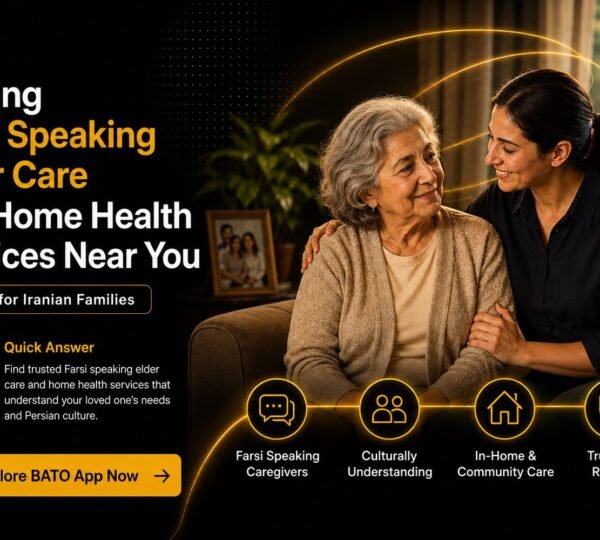
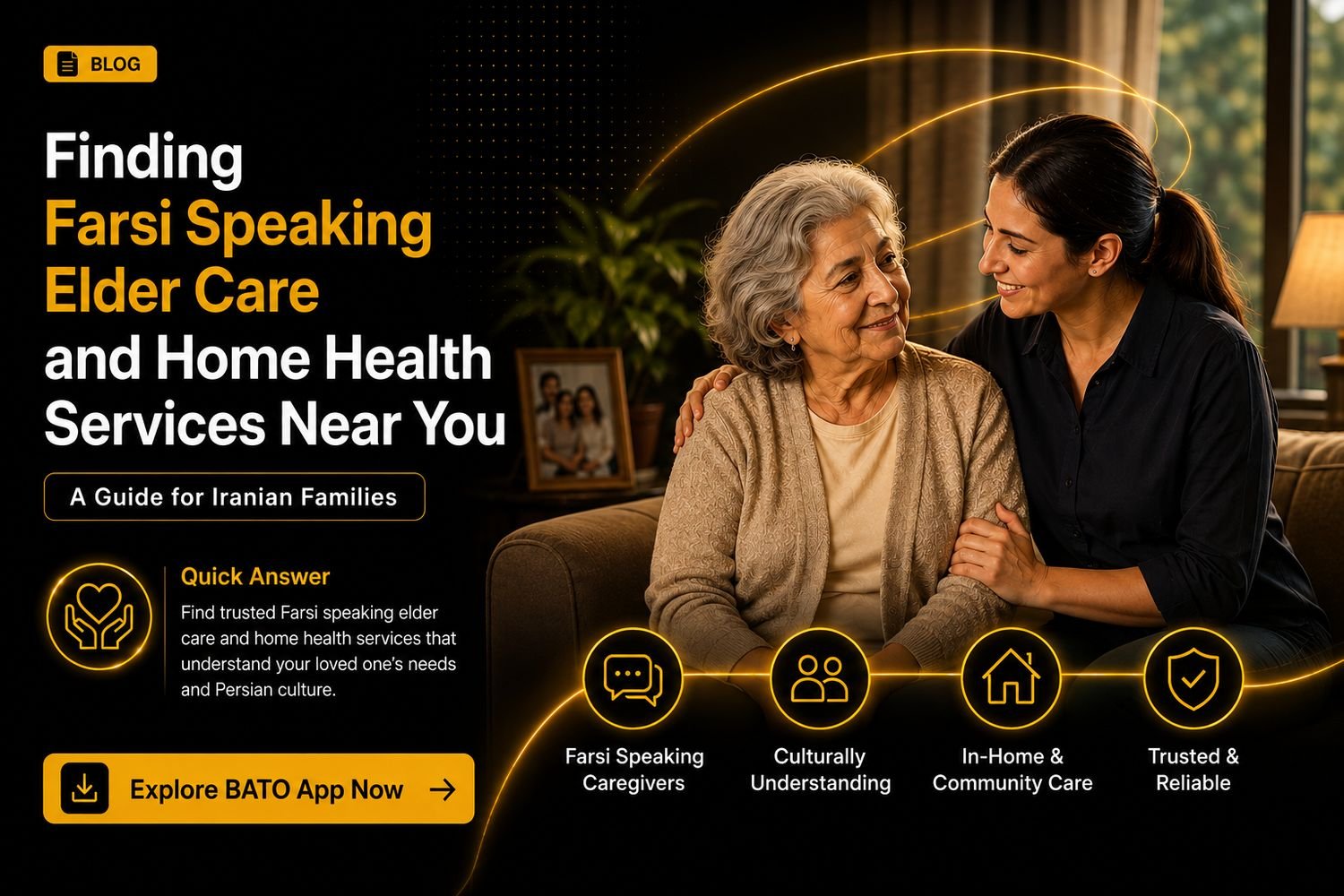
Caring for an aging parent or elderly family member is one of the most meaningful responsibilities a person can take on. In Persian culture, we call this deep sense of family duty “مراقبت از خانواده” (moráqebat az khânevâde), caring for the family. For Iranian families living in the United States and Canada, this responsibility comes with an additional layer of complexity. Finding a caregiver who speaks Farsi, understands Persian culture, and can connect with your elderly loved one on a personal and emotional level is not always straightforward.
Most elder care agencies were not built with the Iranian diaspora in mind, and the language barrier alone can make the entire process stressful and overwhelming. If you are searching for a Farsi speaking elder care provider, a Persian home health aide, or trusted Iranian senior care services near you, this guide is written specifically for you.
Whether your parent has just moved in with you, is living independently but needs regular support, or requires full-time medical attention, understanding your options is the first step toward making the right decision. And the Bato app is the fastest way to find trusted Farsi speaking care providers in your city.
Why Language Matters So Much in Elder Care | چرا زبان در مراقبت از سالمندان اهمیت دارد
When we talk about elder care, we are not just talking about physical tasks like cooking, cleaning, or administering medication. We are talking about human connection, dignity, and emotional comfort during one of the most vulnerable stages of a person’s life.
For Iranian seniors, especially those who immigrated to the US or Canada later in life and never became fully comfortable in English, having a caregiver who speaks Farsi is not a luxury. It is a necessity. In Farsi, we say “سالمند” (sâlemand) for elder or senior, and the care of our سالمندان has always been central to Iranian family values.
Research consistently shows that older adults who receive care in their native language experience lower rates of depression, anxiety, and confusion. They are more likely to clearly communicate their needs, report pain accurately, follow medical instructions correctly, and feel a genuine sense of trust with the people around them.
When a senior cannot express how they feel to their caregiver, small problems become big ones. A misunderstood symptom, a medication taken at the wrong time, or simply feeling lonely and unable to talk to the person in the room, these are real and serious consequences of the language gap in elder care.
For Iranian families, the cultural dimension matters just as much as language. Persian culture places a high value on respect for elders, family involvement in care decisions, and maintaining dignity in all circumstances. A caregiver who understands these values, and the importance of “احترام” (ehterâm) — respect — will approach their work very differently from someone who does not.
For Iranian families, the cultural dimension matters just as much as the language. Persian culture places a high value on respect for elders, family involvement in care decisions, and maintaining dignity in all circumstances. A caregiver who understands these values will approach their work very differently from one who does not.
Types of Farsi Speaking Elder Care Services Available
Before you start searching for a Farsi speaking caregiver, it helps to understand what types of services exist. Elder care is not one size fits all, and the right option depends on your loved one’s health, level of independence, and personal preferences.
In-Home Care — مراقبت در خانه
In-home care is the most popular option for Iranian families because it allows seniors to remain in the comfort and familiarity of their own home. A Persian home health aide visits regularly, sometimes daily, to help with tasks such as bathing, dressing, meal preparation, medication reminders, transportation to medical appointments, and light housekeeping.
In-home care can be provided through a licensed home health agency or arranged privately through community referrals. For Iranian families, finding a Farsi speaking home health aide through personal networks, Iranian community organizations, or the Bato app is often the most effective and trustworthy approach.
Adult Day Programs
Adult day programs offer structured daytime activities for seniors in a group setting. They provide socialization, meals, health monitoring, and activities while giving family caregivers a break during the day. If you can find an adult day program in your area with Persian speaking staff or a significant Iranian attendee population, this can be an excellent option for seniors who are socially active but need supervision.
Assisted Living Facilities — مراکز مراقبت
Assisted living facilities provide housing, meals, and personal care support in a residential community setting. While most assisted living facilities in the US and Canada do not specialize in Iranian culture, some facilities in cities with large Iranian populations such as Los Angeles, Toronto, and Vancouver have staff members who speak Farsi or serve a significant number of Iranian residents.
When evaluating an assisted living facility, ask directly about Farsi speaking staff, Persian meal options, and cultural programming relevant to the Iranian community.
Memory Care
Memory care is a specialized form of assisted living for seniors with Alzheimer’s disease or other forms of dementia. For Iranian seniors with memory loss, having a Farsi speaking caregiver is particularly important. People with dementia often revert to their first language as the disease progresses, even if they were fluent in English for decades. A caregiver who only speaks English may be completely unable to communicate with a Persian speaking senior in the later stages of dementia.
Hospice and Palliative Care
Hospice and palliative care focus on comfort and quality of life for seniors with terminal illness. During this deeply personal stage, having a Farsi speaking care team and an understanding of Iranian cultural and religious traditions around death and dying is incredibly important. Families should ask specifically about culturally sensitive care options when choosing a hospice provider.
How to Find a Farsi Speaking Caregiver Near You — چطور یک مراقب فارسیزبان پیدا کنید
Finding a qualified Farsi speaking elder care provider takes some research, but there are several effective ways to approach the search.
Use the Bato App
The fastest and most reliable way to find a Farsi speaking caregiver or Iranian senior care provider in your city is through the Bato app. Bato is the Iranian community’s own local business and services platform, designed specifically to connect Farsi speaking customers with trusted Iranian professionals across the US and Canada.
You can search directly for home health aides, elder care services, and Persian speaking caregivers in your city. Every listing on Bato is from the Iranian community, so you know immediately that you are reaching providers who understand your cultural values and speak your language. Download the Bato app today and search for elder care providers near you in seconds.
Ask Within Your Iranian Community Network
The Iranian diaspora, or “ایرانیان خارج از کشور” (irâniyân-e khârej az keshvar), in cities like Los Angeles, Toronto, Houston, and Vancouver is tightly connected. Word of mouth within the community is often one of the fastest and most reliable ways to find a trusted Farsi speaking caregiver. Ask at your local Persian mosque, church, or cultural center. Post in Iranian community Facebook groups or WhatsApp networks. Other families who have been through the same search are often your best resource.
Contact Iranian Community Organizations
Many cities with large Iranian populations have community organizations that maintain resource lists for families in need. Organizations like Iranian American community centers, Persian cultural societies, and Iranian senior associations often keep referral lists of Farsi speaking care providers. They can point you toward vetted options that other community members have used and trusted.
Search Through Home Health Agencies
Some home health agencies in cities with large Iranian populations specifically recruit Farsi speaking caregivers. When calling an agency, ask directly: “Do you have caregivers who speak Farsi?” and “Do you have experience serving Iranian families?” A good agency will be happy to answer these questions and match you with an appropriate caregiver.
Questions to Ask Before Hiring a Farsi Speaking Caregiver
Once you have identified potential caregivers or agencies, the interview process is critical. Here are the most important questions to ask.
Is the caregiver fluent in Farsi, or just conversational? There is a significant difference, especially when it comes to medical terminology and emotional support.
Does the caregiver have experience working with Iranian seniors specifically? Cultural familiarity matters beyond just language.
What is the caregiver’s background and training? Are they certified as a home health aide, certified nursing assistant, or do they hold other relevant credentials?
How does the agency handle emergency situations and caregiver absences? What is the backup plan if your regular caregiver is unavailable?
Are background checks and references available? Any reputable agency or independent caregiver should be willing to provide these without hesitation.
How is billing handled? Does the agency accept insurance or Medicaid? What are the hourly rates and minimum hour requirements?
Understanding the Costs of Elder Care for Iranian Families — هزینه مراقبت از سالمندان
Elder care costs vary significantly depending on the type of care, the level of need, and the city or region where you live. In the United States, in-home care typically ranges from $20 to $40 per hour depending on location and the caregiver’s qualifications. In Canadian cities like Toronto and Vancouver, rates are comparable and vary based on provincial regulations.
Many Iranian families are not aware that some elder care costs can be covered through government programs, insurance, or veterans’ benefits. In the US, Medicaid covers home health care for seniors who qualify based on income and medical need. Medicare covers short-term home health services after a hospitalization.
It is always worth speaking with a social worker or elder care advisor to understand what financial assistance your family may be eligible for before making care decisions based purely on out-of-pocket costs.
Supporting Your Loved One Through the Transition
Bringing a caregiver into your family’s life requires an adjustment period for everyone involved. Here are some practical steps to help the relationship get off to a good start.
Introduce the caregiver gradually. Start with shorter visits before moving to full days or overnight care. This allows your loved one to build familiarity and trust at their own pace.
Create a detailed care plan. Write down your loved one’s daily routine, medication schedule, dietary preferences, religious observances, and any cultural preferences they have. Share this with the caregiver on day one.
Stay involved. Even if you have hired a professional caregiver, regular check-ins with your loved one and the caregiver are important. Watch for signs of discomfort or dissatisfaction on either side.
Respect your loved one’s privacy and dignity. Persian culture places a high value on modesty and personal dignity, or “شرم و حیا” (sharm-o-hayâ). Make sure the caregiver understands and respects these values in all aspects of their care.
FAQ — Frequently Asked Questions About Farsi Speaking Elder Care
Q: Where can I find a Farsi speaking home health aide near me?
A: The easiest way is to download the Bato app and search for elder care providers in your city. Bato is specifically designed for the Iranian community and lists trusted Farsi speaking service providers across the US and Canada.
Q: Is in-home care covered by insurance for Iranian seniors?
A: In the United States, Medicaid covers home health care for eligible seniors and Medicare covers short-term home health services. Long-term care insurance policies may also cover costs. Check with a social worker or elder care advisor to understand your specific eligibility.
Q: What should I look for in a Persian home health aide?
A: Look for fluency in Farsi, relevant care certifications such as CNA or HHA, experience working with Iranian seniors, strong references, and a genuine understanding of Persian cultural values around dignity and respect.
Q: Can I find an Iranian caregiver through community groups?
A: Yes. Iranian community Facebook groups, WhatsApp networks, local Persian cultural centers, and apps like Bato are all excellent ways to find trusted Farsi speaking caregivers through community referrals.
Q: What is the difference between home health care and personal care?
A: Home health care is medical in nature and is provided by licensed healthcare professionals such as nurses or therapists. Personal care focuses on daily living activities such as bathing, dressing, and meal preparation and is provided by home health aides or personal care assistants.
CONCLUSION
Finding the right Farsi speaking elder care or Persian home health aide for your family is a process that takes time, research, and careful consideration. But it is one of the most important decisions you will make for your loved one’s health, happiness, and dignity in their later years.
The Iranian community in the US and Canada is growing, and so is the network of Farsi speaking care providers who understand our values and our way of caring for our سالمندان. You are not alone in this search. Download the Bato app today and find trusted Iranian care providers in your city in minutes.