Iranian newcomers settling in the US can find trusted doctors, lawyers, housing help, and community support fastest through Farsi-speaking networks and community-specific platforms like Bato, rather than generic search engines, since these connect newcomers directly with people who understand both the language and the culture.
You’re Not the First and That’s a Good Thing
If you’ve recently arrived in the United States from Iran, one thing is worth knowing right away: you’re joining one of the largest and most established Iranian communities outside of Iran. More than half of all Iranian immigrants in the US live in California, and more than a third of the entire Iranian American population is concentrated in the Los Angeles metro area alone, a community so large it’s often nicknamed “Tehrangeles.”
That matters practically, not just symbolically. It means that whatever you need, a Farsi-speaking doctor, a halal grocery store, a community center, someone who understands what it’s like to rebuild a life in a new country, someone in your city has almost certainly needed it too, and a support system likely already exists. The challenge for most newcomers isn’t that these resources don’t exist. It’s that they’re scattered across word-of-mouth, private Facebook groups, and personal referrals, making them hard to find if you don’t already know someone to ask.
This is also a well-established community in a broader sense: Iranian immigrants in the US tend to have notably high rates of education and English proficiency compared to the overall immigrant population, and many arrived decades ago and have since built businesses, professional networks, and cultural institutions that newcomers today can plug directly into.
Start With the Official Basics
Before diving into community resources, a few official steps make everything else easier, regardless of your immigration status or how long you plan to stay:
- Social Security Number (SSN): If you’re a lawful permanent resident or authorized to work, apply for your SSN as early as possible, you’ll need it for employment, banking, and building credit.
- State ID or Driver’s License: Required for most day-to-day tasks, from renting an apartment to opening a bank account to boarding a domestic flight.
- Bank Account: Opening a US bank account early helps you start building a financial history in the country, which matters for everything from renting an apartment to qualifying for a car loan later.
- USCIS Resources: U.S. Citizenship and Immigration Services offers a free guide called “Welcome to the United States,” covering practical topics like healthcare, education, employment, and emergency services for new immigrants.
These steps aren’t specific to the Iranian community, but they’re the foundation everything else is built on, and skipping or delaying them tends to slow down every other part of settling in.
Finding Farsi-Speaking Professionals
One of the most common frustrations newcomers describe is trying to explain a medical issue, a legal question, or a financial situation in a second language while still learning it. This is where finding Farsi-speaking professionals makes an outsized difference, not just for comfort, but for accuracy. A doctor who speaks your language won’t misunderstand a symptom. A lawyer who understands both English and Farsi won’t lose nuance in a contract or immigration document. An accountant who has worked with other newcomers will know exactly which tax situations tend to catch new arrivals off guard.
Common categories newcomers look for first:
- Farsi-speaking doctors and dentists
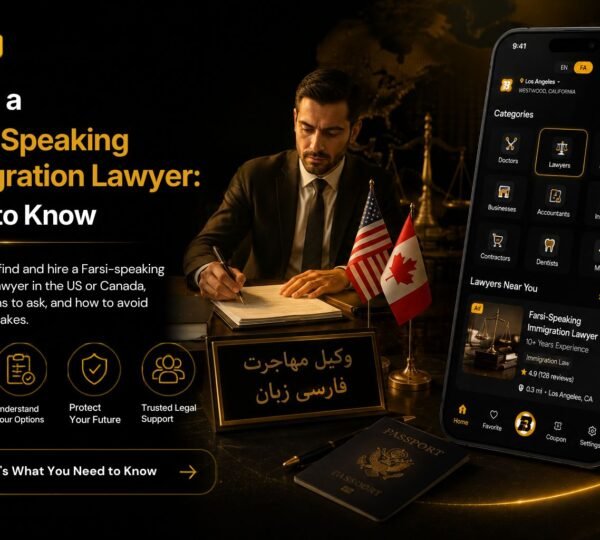
- Immigration and family lawyers who understand Iranian cases specifically
- Accountants familiar with newcomer tax situations
- Real estate agents who can explain the US rental and home-buying process in Farsi
- Insurance agents who can walk through health, auto, and renters coverage in a language you’re fully comfortable in
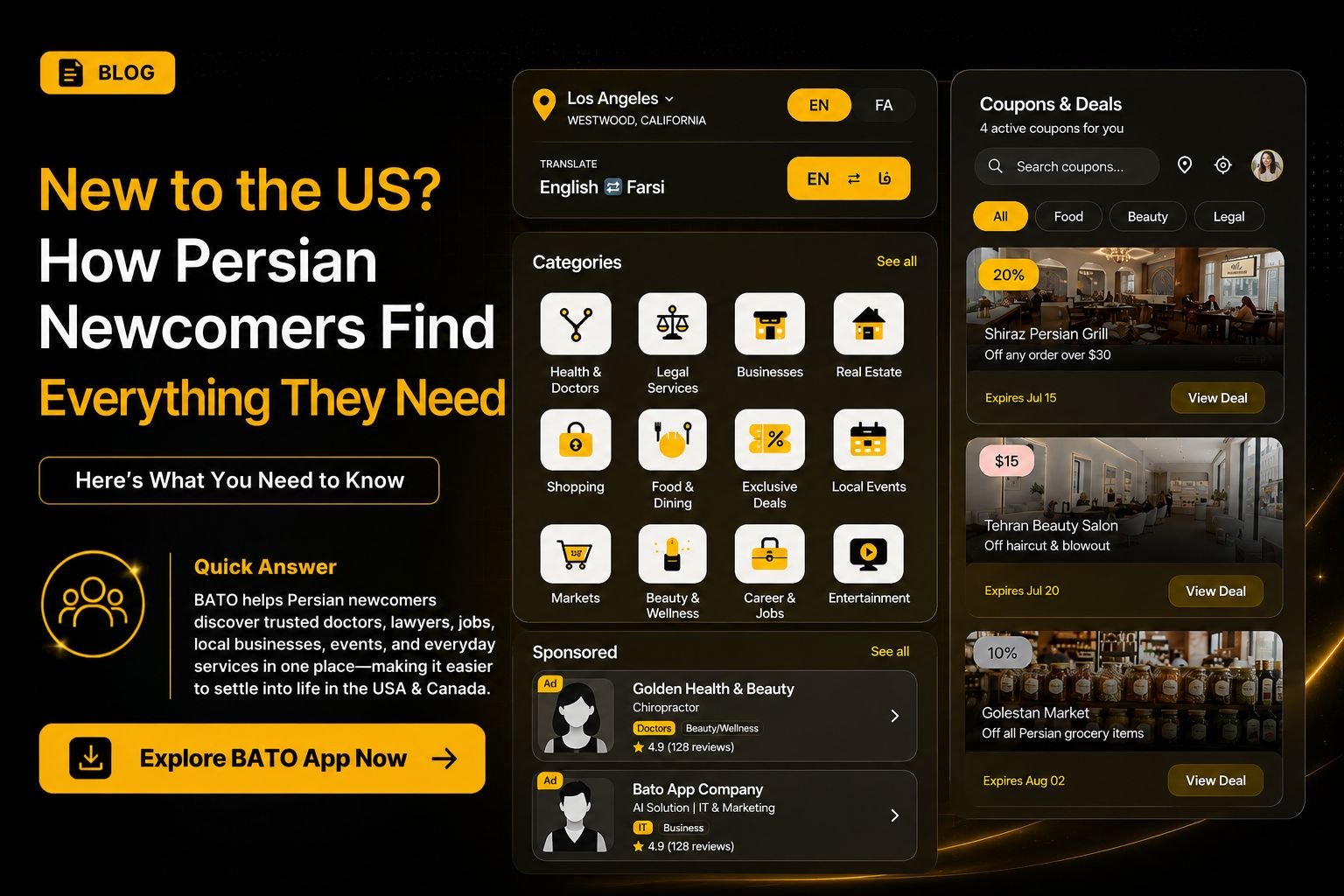
Rather than searching generic terms and hoping for relevant results, a directory built specifically for the Iranian and Farsi-speaking community, like Bato – surfaces exactly these categories, filtered by city, so you’re not sorting through pages of irrelevant listings to find someone who actually speaks your language and understands your situation.
Community Organizations Worth Knowing About
Beyond individual businesses and professionals, community organizations play a major role in helping newcomers settle in. Across the US, a wide range of Iranian cultural centers, professional networks, and social groups exist specifically to ease this transition, offering everything from cultural events to professional networking to plain old friendship with people who understand where you’re coming from, literally and figuratively.
Many of these communities are also active on social media, Facebook and LinkedIn groups like “Iranians in Los Angeles” or “Iranians in NYC” are common starting points, connecting newcomers with people who’ve already been through the exact transition you’re navigating. Professional associations exist too, often organized by industry, tech, medicine, law, and academia all have active Iranian American networks in most major metro areas, and joining one early can shortcut months of building professional connections from scratch.
Finding Work as a Newcomer
For many Iranian newcomers, one of the biggest early priorities is finding work and here again, community connections tend to move faster than cold applications. Iranian-owned businesses across the US are often actively looking to hire Farsi-speaking staff, and community job boards built specifically for this population, such as Bato Jobs, connect newcomers directly with employers who already understand the value of bilingual, bicultural hires. Whether you’re looking for full-time work, a part-time role while you get oriented, or freelance projects to start earning while you build a longer-term plan, tapping into community-specific job resources tends to surface opportunities faster than generic job boards, where your background and language skills may not be immediately understood as an asset.
Housing, Groceries, and the Everyday Stuff
Beyond the big, official milestones, day-to-day life is what actually shapes how settled you feel. A few areas where community-specific knowledge helps most:
Housing: Iranian-owned real estate agents and property managers often understand not just the US rental process, but the specific concerns newcomers have, co-signers, credit history requirements, and lease terms that can feel unfamiliar at first.
Groceries and Food: Persian grocery stores exist in nearly every city with a meaningful Iranian population, carrying everything from saffron and barberries to fresh sangak bread, small things that make a new place start to feel like home.
Beauty and Personal Care: Iranian-owned salons and barbers are often gathering points as much as service providers, especially for newcomers still building a social circle.
Events: Persian cultural events, especially around Nowruz (Persian New Year) and other holidays, are frequently one of the first places newcomers meet people outside of work or school.
Building Community Takes Time – Here’s How to Speed It Up
Settling in doesn’t happen overnight, and it’s completely normal for the first several months to feel disorienting, even for newcomers who arrive with strong English skills and professional experience.
A few things that consistently help people adjust faster:
- Seek out Farsi-speaking professionals early, even for routine needs, it builds a support network faster than you’d expect, since one good referral often leads to several more.
- Join local Iranian community groups, online and in person, most cities have an active one, and most are genuinely welcoming to newcomers.
- Use tools built for the community, rather than generic platforms, when looking for businesses, services, or jobs.
- Attend at least one cultural event in your first few months, Nowruz celebrations, in particular, are widely attended and welcoming to newcomers, and are often the fastest way to meet people outside of work.
- Don’t hesitate to ask for recommendations, the Iranian community in the US is large, established, and, by most accounts, genuinely willing to help newcomers get oriented.
Frequently Asked Questions
Where do most Iranian immigrants live in the US?
More than half of Iranian immigrants in the US live in California, with the largest concentration in the Los Angeles metro area, though significant communities also exist in New York, Texas, and Washington DC.
How can I find a Farsi-speaking doctor or lawyer near me?
A directory built specifically for the Iranian community, such as Bato, lets you search by category and city to find Farsi-speaking professionals directly, rather than filtering through generic search results.
Are there Iranian community organizations that help newcomers?
Yes, Many US cities have Iranian cultural centers, professional networks, and social groups that help newcomers connect, network, and access resources specific to the community.
What should I do first after arriving in the US?
Apply for your Social Security Number if eligible, get a state ID, and open a US bank account, these three steps make almost everything else, from renting an apartment to finding work, significantly easier.
How do I find a job as an Iranian newcomer?
Community-specific job boards like Bato Jobs connect newcomers directly with Iranian-owned businesses looking for Farsi-speaking talent, often surfacing opportunities faster than generic job search platforms.
How do I find other Iranians in my city?
Online groups such as city-specific Facebook or LinkedIn communities are a common starting point, along with local Persian cultural events and Iranian-owned businesses, which often double as informal gathering spaces.